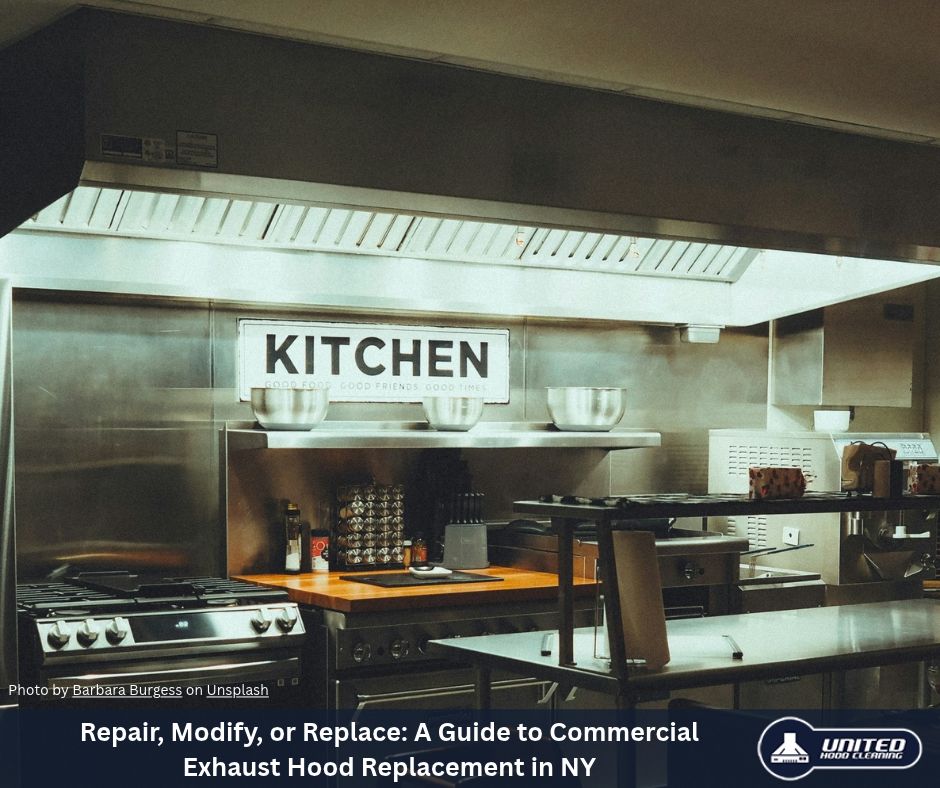
Evaluating Aging Type I Kitchen Hood Systems in Busy Facilities
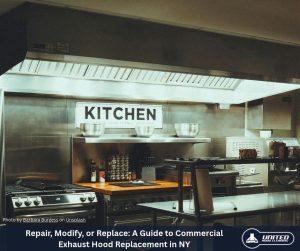
Managing an aging commercial kitchen requires making smart capital decisions about your core ventilation infrastructure. Over many years of intense daily cooking, even the toughest stainless steel Type I exhaust systems experience heavy structural wear. Consequently, restaurant owners and property managers eventually face a critical question regarding their aging overhead canopy and ductwork. Deciding whether to schedule targeted repairs, install component modifications, or invest in full commercial exhaust hood replacement in NY impacts your long-term safety and operating budget.
Type I ventilation systems handle extreme thermal loads, corrosive grease acids, and continuous mechanical vibration every single day. While routine bare-metal cleaning keeps internal steel surfaces clear of flammable deposits, cleaning alone cannot reverse severe metal fatigue or outdated engineering. Furthermore, municipal fire codes and environmental rules across New York evolve regularly to enforce stricter fire containment standards. Therefore, evaluating your existing ventilation assembly honestly helps you avoid pouring money into failing equipment that can no longer pass municipal inspections.
Understanding the exact physical condition of your hood canopy, grease ductwork, and rooftop fan empowers you to plan capital upgrades wisely. Instead of reacting to a sudden emergency shutdown during a busy weekend rush, smart operators assess mechanical warning signs early. By weighing repair costs against long-term reliability, you protect your culinary staff, preserve building integrity, and maintain seamless regulatory compliance.
When Targeted Repairs Restore Safe Ventilation Performance
Not every noisy fan or minor grease drip requires tearing out your entire kitchen ceiling for a brand-new installation. In many cases, targeted mechanical repairs restore full airflow efficiency and code compliance at a fraction of replacement costs. When the main stainless steel hood canopy and fire-rated ductwork remain structurally sound, swapping out worn moving parts makes complete financial sense.
- Replacing Worn Fan Belts and Bearings: Rooftop upblast exhaust fans spin continuously under harsh weather conditions, which naturally stretches drive belts and wears down motor bearings over time. Installing fresh belts, pulleys, and sealed bearings eliminates loud squealing noises and restores proper static suction across your cooking line immediately.
- Resealing Minor Duct Joint Leaks: Thermal expansion and contraction occasionally cause older gasket seals or minor weld spots along accessible duct seams to seep liquid grease. Certified technicians can clean the affected area back to bare metal and apply approved high-temperature fire-rated sealants to stop drips permanently.
- Upgrading Damaged Baffle Grease Filters: Bent, corroded, or missing baffle filters allow dangerous grease vapors to bypass your primary containment barrier and coat upper ductwork. Replacing damaged filters with heavy-duty stainless steel baffles restores proper grease capture and satisfies local fire code rules right away.
- Repairing Rooftop Fan Hinge Kits and Grease Boxes: Broken fan hinges prevent technicians from tilting the motor safely during cleanings, while overflowing rooftop grease traps damage roof membranes. Installing heavy-duty hinge hardware and fresh absorbent containment pads resolves these common inspection citations quickly and affordably.
Choosing targeted repairs works best when your underlying ductwork meets modern gauge thickness standards and shows zero signs of deep rust. When you address minor mechanical wear promptly, you extend the working lifespan of your ventilation system and keep daily operations running smoothly.
Strategic Modifications to Upgrade Existing Exhaust Infrastructure
Sometimes an existing Type I hood possesses solid structural steel, yet it fails to meet current operational demands or updated local fire codes. Rather than committing to full commercial exhaust hood replacement in NY, strategic system modifications often bridge the compliance gap effectively. Modifying specific subcomponents allows facility managers to modernize airflow performance and satisfy municipal auditors without enduring weeks of kitchen construction.
For instance, many legacy restaurants across New York operate older duct runs that lack sufficient cleanout access panels. Because technicians cannot clean blind horizontal turns without proper openings, adding liquid-tight hinged access doors every twelve feet solves a major compliance bottleneck. Similarly, if your kitchen adds a new high-output fryer or charbroiler, upgrading your rooftop exhaust fan motor and balancing your make-up air unit can boost capture velocity without replacing the overhead canopy.
Additionally, restaurants located in dense urban neighborhoods frequently modify existing systems by adding Pollution Control Units or upgraded fire suppression nozzles. Installing electrostatic precipitators or carbon filtration modules downstream captures heavy smoke and cooking odors before exhaust air exits the building. Meanwhile, updating wet-chemical fire suppression piping ensures discharge nozzles align perfectly with reorganized cooking appliances. Ultimately, smart modifications modernize older ventilation infrastructure, lower energy waste, and help your facility pass strict municipal audits cleanly.
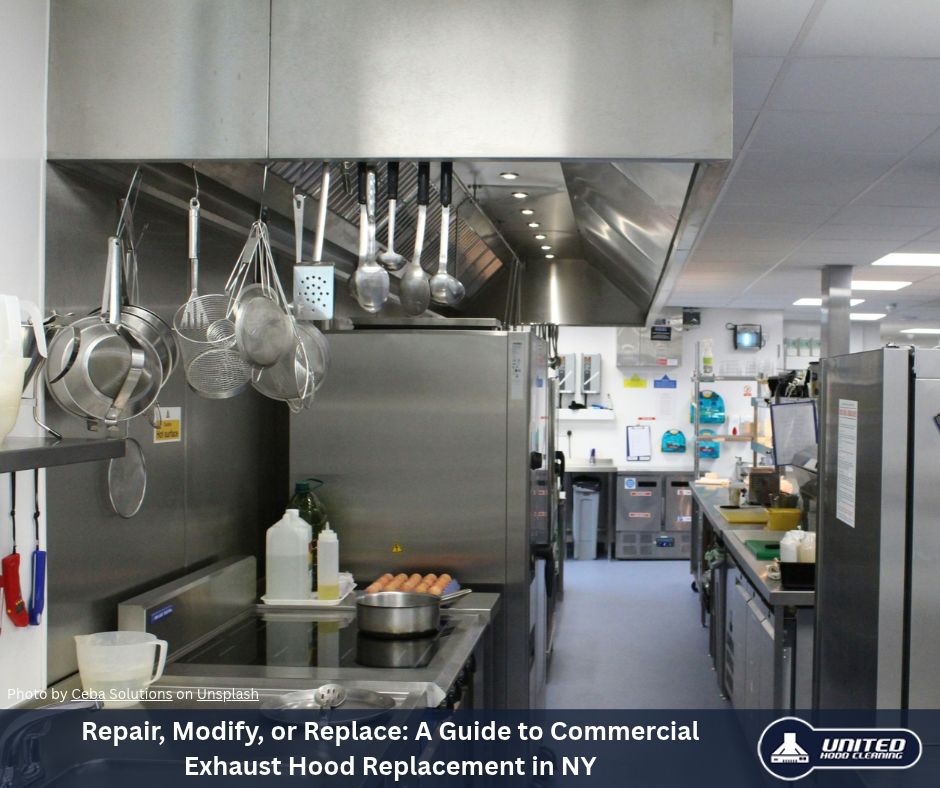
Clear Signs You Need Commercial Exhaust Hood Replacement in NY
While repairs and modifications solve many operational issues, certain structural and regulatory defects leave zero room for patchwork fixes. Recognizing when an aging ventilation system has reached the end of its safe service life protects your property from catastrophic fire hazards. When severe physical deterioration compromises containment integrity, investing in complete commercial exhaust hood replacement in NY becomes the safest and most economical choice.
First, extensive rust perforation or corroded weld seams inside the hood plenum or vertical duct shaft represent an immediate fire containment failure. Under National Fire Protection Association Standard 96, grease ducts must remain completely liquid-tight to prevent roaring duct fires from escaping into surrounding walls or ceilings. Second, legacy systems built with thin sheet metal, soldered joints, or prohibited fiberglass duct materials violate modern building codes and cannot be grandfathered in during major renovations.
Third, if you completely redesign your kitchen layout or switch from standard gas ranges to solid-fuel wood or coal ovens, your existing hood cannot handle the new thermal load. Solid-fuel appliances require dedicated, heavy-gauge exhaust flues separated entirely from standard grease hoods. Finally, when annual repair bills begin approaching fifty percent of the cost of new equipment, continuing to patch failing motors and leaking canopies wastes valuable capital. Committing to commercial exhaust hood replacement in NY eliminates recurring emergency breakdowns and resets your mechanical reliability for decades.
Key Factors to Consider Before Replacing Your Kitchen Hood
Planning a full commercial exhaust hood replacement in NY requires careful coordination between mechanical engineers, licensed contractors, and municipal permitting offices. Because commercial kitchen construction involves structural, electrical, plumbing, and fire suppression trades, rushing into installation without thorough preparation causes costly delays. Evaluating critical technical factors upfront ensures your new ventilation system delivers optimal performance from day one.
- Accurate Airflow and Make-Up Air Calculations: Every new exhaust hood must match the exact cubic feet per minute extraction requirements of your specific cooking appliances. Simultaneously, your contractor must calibrate your dedicated make-up air supply unit so your kitchen never suffers from negative air pressure or slamming doors.
- Municipal Permitting and Architectural Approvals: Installing new ductwork or rooftop exhaust fans in New York requires formal plan filings with the Department of Buildings and the Fire Department of New York. Working with experienced professionals ensures your engineering drawings satisfy local zoning rules, noise ordinances, and rooftop clearance guidelines smoothly.
- Custom Canopy Sizing and Capture Overhang: Modern Type I hoods require proper front and side overhang dimensions beyond the edge of your cooking equipment to capture rising smoke plumes effectively. Selecting proximity or canopy-style hoods tailored to your ceiling height maximizes capture efficiency while saving valuable kitchen floor space.
- Integrated Fire Suppression and Controls: Your replacement project must include UL-300 compliant wet-chemical fire suppression systems interlocked with gas shutoff valves and electrical shunt-trip breakers. Adding demand-controlled ventilation sensors further reduces utility expenses by slowing fan speeds automatically during quiet prep periods.
Addressing these engineering and regulatory details early streamlines construction timelines and prevents expensive inspection failures. When your new Type I hood system is properly designed and permitted, your kitchen enjoys superior air quality, lower energy bills, and total code compliance.
Partner with United Hood Cleaning to Protect Your Ventilation Investment
Whether you decide to repair an existing unit, modify aging ductwork, or complete a full commercial exhaust hood replacement in NY, ongoing maintenance determines long-term success. United Hood Cleaning helps restaurant owners, general contractors, and facility managers keep their Type I ventilation systems spotless, efficient, and fully code-compliant across the tri-state area. As a family-owned business serving New York, New Jersey, and Connecticut, our FDNY-certified and IKECA-trained technicians understand every detail of commercial exhaust care.
Once your new or newly repaired hood system is operational, our team establishes a customized bare-metal cleaning schedule matched to your exact cooking volume. During every overnight service visit, we protect your kitchen appliances with heavy plastic sheeting, scrape and hot-water pressure wash your entire exhaust path, and polish your stainless steel canopy. Furthermore, we install rooftop grease containment systems, replace worn fan belts, and affix official FDNY Certificate of Performance decals alongside comprehensive digital photo reports.
We work flexible off-hours seven days a week so your restaurant never loses profitable service time. Partnering with United Hood Cleaning protects your capital investment, prevents dangerous grease fires, and keeps your facility ready for any municipal inspection. Call our friendly team today at (888) 889-3828 or visit our website to schedule your ventilation evaluation and keep your kitchen operating safely.