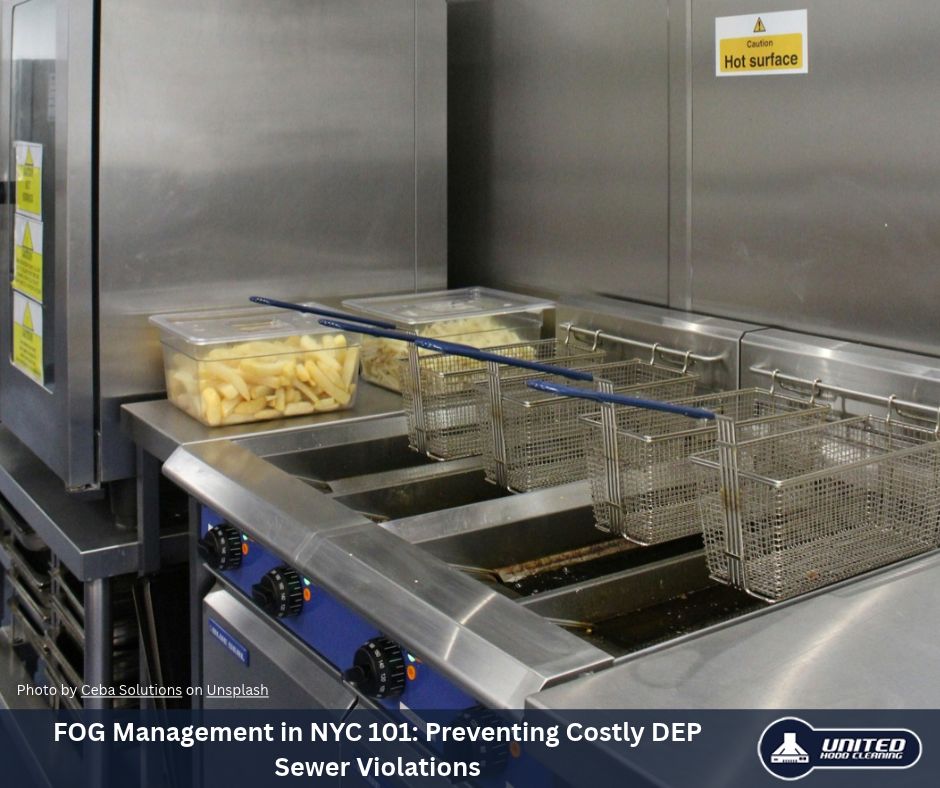
Why Proper Grease Control Matters for New York City Kitchens
Running a busy restaurant, hotel kitchen, or commercial bakery in New York City involves juggling dozens of daily operational priorities. Among the most critical yet frequently overlooked responsibilities is controlling what flows down your kitchen floor drains and dishwashing sinks. Every time your staff rinses a greasy sheet pan, drains a soup kettle, or washes oily dishes, fats, oils, and grease enter your plumbing system. Consequently, establishing a reliable plan for FOG management in NYC protects your business from messy plumbing emergencies and severe municipal penalties.
While hot water and dish soap temporarily liquefy cooking oils at the sink, that liquid state lasts only for a few moments. As wastewater travels through cool underground pipes beneath city streets, temperatures drop rapidly and cause those melted fats to solidify. Over weeks and months, cooled grease clings to interior pipe walls, trapping food scraps, coffee grounds, and paper debris along the way. Eventually, this rock-hard buildup narrows the pipe opening completely and blocks wastewater flow across your entire building.
Understanding how fats, oils, and grease behave inside municipal infrastructure empowers restaurant operators to prevent costly operational disruptions. Instead of waiting for foul sewage backups to flood your dining room during a busy Friday dinner rush, smart managers take proactive steps early. By combining smart kitchen habits with scheduled equipment servicing, you protect city waterways, preserve building plumbing, and stay completely compliant with local environmental laws.
How Improper FOG Disposal Damages Plumbing and Municipal Sewers
To appreciate why city regulators enforce strict wastewater rules, you must understand what happens after dirty dishwater leaves your kitchen. New York City relies on thousands of miles of interconnected sewer lines to transport wastewater safely toward municipal treatment plants. When commercial kitchens dump frying oil or greasy dishwater straight down the drain without proper filtration, the consequences impact both private property and public infrastructure. Therefore, effective FOG management in NYC serves as the primary barrier against destructive sewer blockages across all five boroughs.
Inside your own building, hardening grease coats cast-iron drain lines and slows drainage across prep sinks, floor drains, and restrooms. When a severe blockage forms inside your main building lateral line, raw sewage backs up directly into your kitchen floor drains. Such an emergency forces immediate restaurant closures, ruins expensive food inventory, and exposes your staff and guests to hazardous bacteria. Furthermore, emergency hydro-jetting and pipe replacement bills quickly run into thousands of dollars in unplanned repair expenses.
Meanwhile, grease that escapes into public street sewers combines with flushed wipes and street debris to form massive, concrete-like blockages known as fatbergs. These giant obstructions choke municipal sewer mains and cause raw wastewater to overflow into basements, city streets, and surrounding rivers. Because repairing damaged city sewer lines costs taxpayers millions of dollars annually, municipal inspectors aggressively track grease discharges back to offending commercial kitchens.
Grease Traps vs. Passive Interceptors: Understanding Your Equipment
Every commercial food service establishment in New York City must install approved grease separation hardware to capture fats before wastewater enters public sewers. However, many restaurant managers confuse under-sink grease traps with larger passive hydromechanical interceptors. Knowing how your specific equipment operates helps you maintain proper FOG management in NYC and prevents mechanical failures during peak service hours.
- Under-Sink Grease Traps: Typically installed directly beneath commercial three-compartment sinks or dishwashers, these compact metal boxes handle lower wastewater flow rates up to fifty gallons per minute. Inside the tank, internal baffles slow incoming water down so lighter fats float to the top while heavier food solids sink to the bottom, allowing cleaner water to exit into the sewer line.
- Passive Hydromechanical Interceptors: Designed for high-volume restaurants, hotels, and institutional kitchens, these large-capacity units sit either in basement mechanical rooms or buried underground outside the building. Because they hold hundreds or thousands of gallons of wastewater, passive interceptors provide extended retention time that separates heavy grease loads far more effectively during continuous cooking rushes.
- Automatic Grease Recovery Units (AGRUs): Some modern facilities utilize motorized skimming systems that heat trapped oil and automatically skim liquefied grease into an external collection cassette daily. While automated units reduce manual scooping, they still require regular internal flushing and sensor checks to prevent solid food sludge from clogging heating elements.
Regardless of which separation system your building uses, none of these devices destroy or dissolve grease permanently. Instead, they simply store captured waste until a licensed technician pumps the tank clean. Monitoring your equipment capacity ensures that trapped grease never overflows back into your plumbing network.
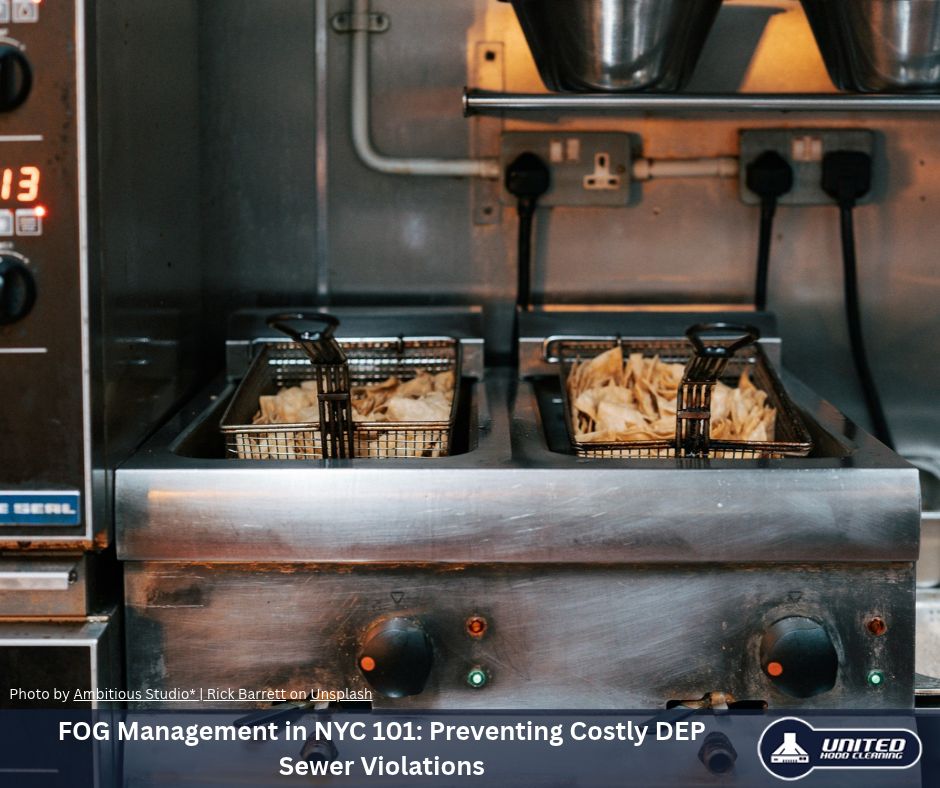
Navigating NYC DEP Regulations and Avoiding Heavy Violation Fines
In New York City, the Department of Environmental Protection enforces strict wastewater discharge laws to protect municipal sewers from grease pollution. Under local environmental codes, commercial kitchens must keep their grease traps and interceptors clean, watertight, and functioning at peak efficiency year-round. Consequently, neglecting FOG management in NYC exposes your business to unannounced inspections, mandatory compliance orders, and steep financial fines.
During a routine inspection, city officials lift the lid of your grease trap or interceptor to measure the accumulated thickness of floating grease and settled bottom solids. Under the widely enforced twenty-five percent rule, a grease interceptor becomes non-compliant as soon as combined grease and sludge fill one-quarter of the tank’s total liquid depth. Once buildup exceeds twenty-five percent, wastewater rushes straight through the unit without separating, carrying raw oil directly into city sewers.
Additionally, DEP inspectors verify that your unit features intact internal baffles, undamaged rubber lid gaskets, and properly functioning flow-control devices. If an inspector discovers a missing baffle, a leaking cover, or an overflowing tank, they issue an immediate notice of violation. Fines for improper grease maintenance start in the hundreds of dollars and escalate rapidly into thousands of dollars for repeat offenses or severe sewer blockages. Maintaining detailed pumping logs and keeping your tank clean guarantees effortless municipal audits.
Actionable Daily Kitchen Practices and Professional Pumping Schedules
Achieving seamless compliance requires combining smart daily habits on the kitchen line with scheduled professional vacuum pumping. Even the largest underground grease interceptor fills up quickly if kitchen staff wash heavy food scraps and liquid fryer oil straight down the sink. Implementing clear, easy-to-follow kitchen rules empowers your culinary team to support FOG management in NYC during every single shift.
- Dry-Wipe Pots, Pans, and Plates Before Washing: Train dishwashers and line cooks to scrape leftover sauces, butter, and food scraps into compost or trash bins using rubber spatulas before rinsing dishes in hot water.
- Collect Used Fryer Oil in Dedicated Rendering Drums: Never pour cooled deep-fryer oil or meat drippings down floor drains; instead, transfer liquid oils into sealed outdoor recycling containers for licensed biofuel pickup.
- Install Fine Mesh Drain Strainers Everywhere: Place removable stainless steel mesh baskets inside every prep sink, mop basin, and floor drain to catch stray rice, vegetable peels, and coffee grounds before they enter your grease trap.
- Avoid Using Chemical Degreasers or Enzymes as Substitutes: Pouring harsh solvents or bacterial additives down the drain merely pushes liquefied grease further down your pipes, where it solidifies later and violates city environmental codes.
- Follow a Strict Professional Pumping Calendar: Schedule licensed vacuum truck pumping every thirty to ninety days based on your cooking volume so your tank never approaches the twenty-five percent fullness threshold.
Combining disciplined daily sink habits with reliable professional pumping keeps your drains flowing fast and eliminates foul kitchen odors. When your entire staff understands their role in keeping grease out of the pipes, plumbing emergencies become a thing of the past.
Partner with United Hood Cleaning for Complete Kitchen Grease Protection
Protecting your commercial kitchen from fire hazards and plumbing violations requires a comprehensive approach to grease control across your entire facility. United Hood Cleaning helps restaurants, hotels, and food service operators master FOG management in NYC alongside certified exhaust hood and ventilation care. As a family-owned business serving New York, New Jersey, and Connecticut, our FDNY-certified and IKECA-trained technicians understand municipal compliance rules from your rooftop fan all the way down to your basement grease trap.
During our scheduled service visits, our experienced crew pumps out accumulated fats, oils, and solid sludge, scrapes internal interceptor baffles clean, and inspects lid gaskets for proper sealing. Furthermore, we coordinate your grease trap maintenance with bare-metal hood cleaning and rooftop grease containment servicing so your entire facility stays safe under one roof. We provide complete digital service logs and waste manifests after every visit, ensuring your compliance binder is always ready for DEP and FDNY inspectors.
With flexible overnight and off-hour scheduling available seven days a week, we maintain your critical systems without interrupting daily dining service. Partnering with United Hood Cleaning saves time, prevents costly municipal fines, and protects your property from messy backups and fire hazards. Call our friendly team today at (888) 889-3828 or visit our website to schedule your facility evaluation and keep your kitchen running cleanly and compliantly.