


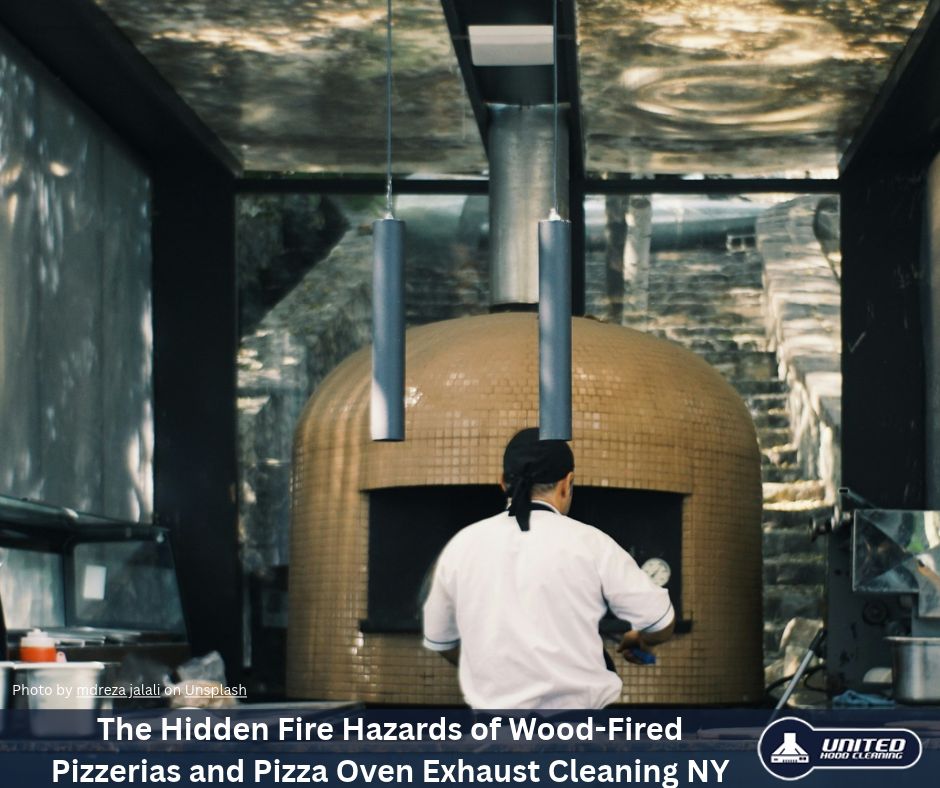
Why Solid-Fuel Pizza Ovens Create Extreme Ventilation Fire Risks
Operating a traditional wood-fired or coal-burning pizzeria brings incredible flavor to your menu, yet it introduces severe thermal hazards into your kitchen. Unlike standard gas ranges, solid-fuel brick ovens burn seasoned hardwood or anthracite coal at temperatures exceeding eight hundred degrees Fahrenheit. Because these ovens burn organic fuel continuously throughout service, the rising exhaust plume carries far more than simple cooking heat. Consequently, scheduling regular pizza oven exhaust cleaning NY appointments becomes the single most critical safety measure for protecting your restaurant and building.
Inside a busy pizzeria kitchen, four distinct combustion byproducts rise into your ventilation hood during every single shift. First, intense thermal energy heats the metal ductwork, priming interior steel surfaces for rapid chemical bonding with airborne particles. Second, fine flour dust drifts upward from the stretching station and mixes directly with rising heat currents. Third, organic animal fats vaporize from pepperoni, sausage, and rich cheeses baking inside the oven chamber. Fourth, burning logs release unburned wood gases that condense into sticky, tar-like creosote inside cooler upper duct sections.
When these four elements collide inside compact urban duct runs, they bake together into a rock-hard, highly combustible carbonized crust. Standard surface wiping with kitchen degreasers cannot penetrate or dissolve this stubborn, layered buildup. Therefore, restaurant owners must treat solid-fuel ventilation care as an urgent fire prevention priority rather than routine janitorial work. Understanding how this volatile chemistry works inside your flues empowers you to eliminate hidden fuel loads before a stray spark ignites a devastating structure fire.
How Creosote, Flour Dust, and Grease Combine Inside Compact Ducts
To appreciate why solid-fuel ventilation systems require specialized care, you must understand what happens out of sight above your oven. As hot smoke leaves the oven mouth, it enters a narrow exhaust flue designed to pull gases up toward the roof. However, as that smoke travels upward through multi-story New York buildings, the surrounding air temperature drops noticeably. Consequently, vaporized wood tars and aerosolized cheese oils cool down and solidify directly onto the interior steel duct walls.
Over several days of heavy lunch and dinner rushes, this sticky residue traps passing clouds of airborne semolina and wheat flour. Furthermore, the continuous radiant heat from the oven bakes these alternating layers of creosote, flour, and grease into a dense carbon scale. Unlike soft fryer grease, which remains somewhat pliable, carbonized creosote resembles hard black glass or brittle charcoal. If an ember floats up from a snapping log inside the hearth, that dried carbon crust ignites almost instantaneously.
Once a creosote fire starts inside a vertical duct shaft, temperatures can spike past two thousand degrees Fahrenheit within seconds. Such extreme heat easily warps standard sheet metal, melts electrical fan wiring, and spreads flames into neighboring apartments or offices. Because urban pizzerias often share walls and roof shafts with residential tenants, a single flue fire puts dozens of lives at risk. Investing in consistent pizza oven exhaust cleaning NY services breaks this dangerous accumulation cycle and removes the fuel source completely.
Mandatory Monthly Cleaning Schedules and FDNY Compliance Rules
Because solid-fuel cooking creates such aggressive fire hazards, municipal regulators enforce strict maintenance timelines across the entire state. Both National Fire Protection Association Standard 96 and New York City fire codes classify wood and coal ovens under the highest risk tier. As a result, pizzeria operators must complete full pizza oven exhaust cleaning NY service every thirty days without exception. Waiting even a few extra weeks allows creosote deposits to reach critical thickness, putting your business in immediate violation of local safety laws.
During unannounced inspections, Fire Department of New York officials examine your solid-fuel exhaust system with extreme precision. Inspectors check the physical Certificate of Performance sticker affixed to your hood canopy to verify the exact date of your last service. Additionally, they inspect spark arrestors, flue dampers, and interior duct access panels to ensure no uncleaned pockets remain hidden inside the shaft. If your documentation shows an expired service date or visible soot buildup, officials issue heavy fines and immediate closure orders.
Dedicated Solid-Fuel Flue Separation
Fire codes require solid-fuel ovens to vent through completely separate exhaust ducts rather than sharing shafts with gas fryers or ranges. Sharing ductwork allows hot embers from burning wood logs to ignite soft grease vapors generated by standard cooking appliances.
Mandatory Spark Arrestor Maintenance
Every solid-fuel hood requires specialized stainless steel spark arrestors to block burning embers from entering the vertical flue. Technicians must remove, scrape, and inspect these arrestors monthly to ensure tiny ash particles do not restrict critical exhaust airflow.
Ash Removal and Disposal Protocols
Safe solid-fuel operation also requires clearing cooled ashes daily into covered, non-combustible metal containers stored away from flammable walls. Proper ash management prevents lingering embers from reigniting overnight and reduces fine particulate dust entering your ventilation canopy.
Following these monthly regulatory requirements keeps your pizzeria compliant, protects your commercial property insurance validity, and ensures uninterrupted dining room operations. When you maintain an organized binder of monthly inspection logs, municipal fire audits become quick, predictable checkups rather than stressful emergencies.
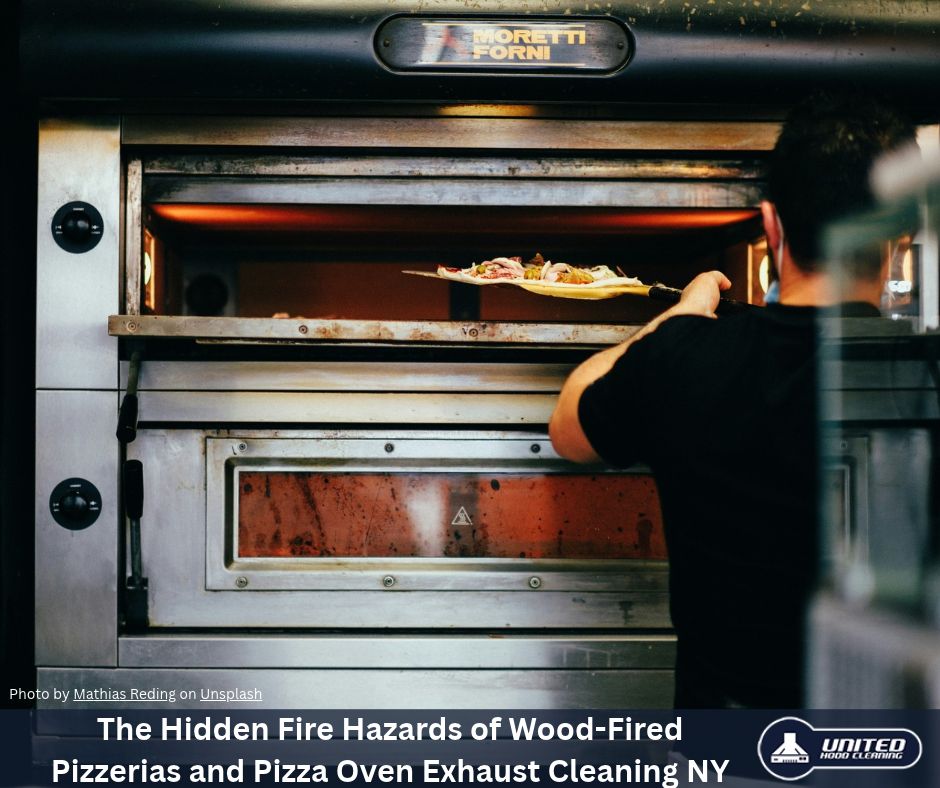
Why Bare-Metal Scraping and Hot Water Washing Are Essential
Many pizzeria owners mistakenly believe that spraying liquid degreaser into the hood canopy cleans their exhaust system effectively. In reality, chemical sprays alone barely touch thick, baked-on creosote and carbonized flour deposits inside solid-fuel flues. Achieving true fire safety requires professional pizza oven exhaust cleaning NY technicians who restore every interior surface back to bare metal. Bare-metal cleaning means removing every trace of soot, tar, and grease until clean, shiny steel is visible throughout the entire duct run.
Professional restoration begins with heavy-duty mechanical scraping using specialized long-handle steel tools and rotary wire brushes. Technicians enter accessible duct panels and work systematically from the rooftop exhaust fan all the way down to the oven canopy. By manually chiseling away hard carbon scale first, our crew exposes the underlying metal surfaces so cleaning agents can work properly. Next, specialists apply industrial-strength, food-safe alkaline degreasers designed specifically to emulsify stubborn organic tars and baked meat fats.
Following chemical dwelling time, technicians blast the entire interior shaft with high-temperature pressure washers operating above two thousand pounds per square inch. Boiling pressurized water flushes loosened soot, dissolved creosote, and dirty runoff safely down containment funnels into sealed collection drums. Meanwhile, specialized rooftop grease containment systems prevent acidic soot water from damaging your building roof membrane or clogging municipal storm drains. Ultimately, combining aggressive mechanical scraping with high-heat pressure washing guarantees complete fuel removal that simple manual wiping can never achieve.
Warning Signs Your Pizzeria Exhaust System Needs Immediate Attention
Even when you follow a strict monthly maintenance calendar, heavy seasonal demand or damp firewood can accelerate creosote buildup unexpectedly. Recognizing early mechanical and airflow warning signs helps pizzeria managers address ventilation bottlenecks before they trigger dangerous smoke backdrafts or flue fires. Paying close attention to how your oven draws air during busy dinner rushes provides valuable clues about interior duct conditions.
- Smoke Spilling Out of the Oven Mouth: When creosote and flour dust narrow the interior diameter of your exhaust flue, fan suction drops noticeably. Consequently, thick wood smoke rolls out into your kitchen and dining room instead of venting cleanly up the chimney shaft.
- Dark Tar Dripping Around Hood Seams: Heavy creosote accumulation eventually liquefies under intense oven heat and seeps through tiny microscopic gaps in duct joints. Seeing black, sticky streaks along your stainless steel canopy or exterior roof fan indicates severe internal saturation requiring immediate pizza oven exhaust cleaning NY intervention.
- Unusual Vibrations or Squealing From the Roof: Thick carbon deposits frequently coat the spinning blades of your rooftop upblast exhaust fan unevenly. This uneven weight throws the fan wheel off balance, causing loud mechanical rattling, strained motor belts, and premature bearing failure.
- Lingering Burnt Wood Odors After Closing: A clean, properly drafting exhaust system clears residual smoke odors quickly once the fire dies down for the night. If your dining room smells strongly of stale campfire soot the next morning, hardened creosote is likely coating your upper ductwork.
Addressing these warning signs right away prevents sudden equipment breakdowns during peak weekend service and eliminates severe structural fire hazards. Training your pizzaiolos and kitchen managers to report airflow changes immediately keeps your ventilation infrastructure operating at peak safety and efficiency.
Partner with United Hood Cleaning for Certified Pizzeria Protection
Protecting a wood-fired or solid-fuel restaurant requires an experienced ventilation partner who understands the unique demands of New York pizzerias. United Hood Cleaning delivers specialized pizza oven exhaust cleaning NY services designed to keep your brick ovens running safely and cleanly every month. As a family-owned business serving New York, New Jersey, and Connecticut, we employ fully FDNY-certified and IKECA-trained technicians who know local fire codes inside and out.
When our team arrives at your pizzeria after closing, we immediately cover your marble prep tables, dough mixers, and brick oven hearth with heavy plastic sheeting. Next, our specialists perform meticulous bare-metal scraping, spark arrestor degreasing, and high-temperature pressure washing from your rooftop fan down to the hood canopy. After polishing your stainless steel surfaces, we attach an official FDNY Certificate of Performance sticker and deliver detailed before-and-after digital photos for your compliance records.
We offer flexible overnight scheduling seven days a week so your pizzeria never loses a single hour of profitable dough prep or dinner service. Partnering with United Hood Cleaning eliminates regulatory guesswork, protects your building from devastating creosote fires, and gives you total peace of mind during inspections. Call our dedicated team today at (888) 889-3828 or visit our website to schedule your monthly solid-fuel exhaust evaluation and keep your ovens firing safely.