


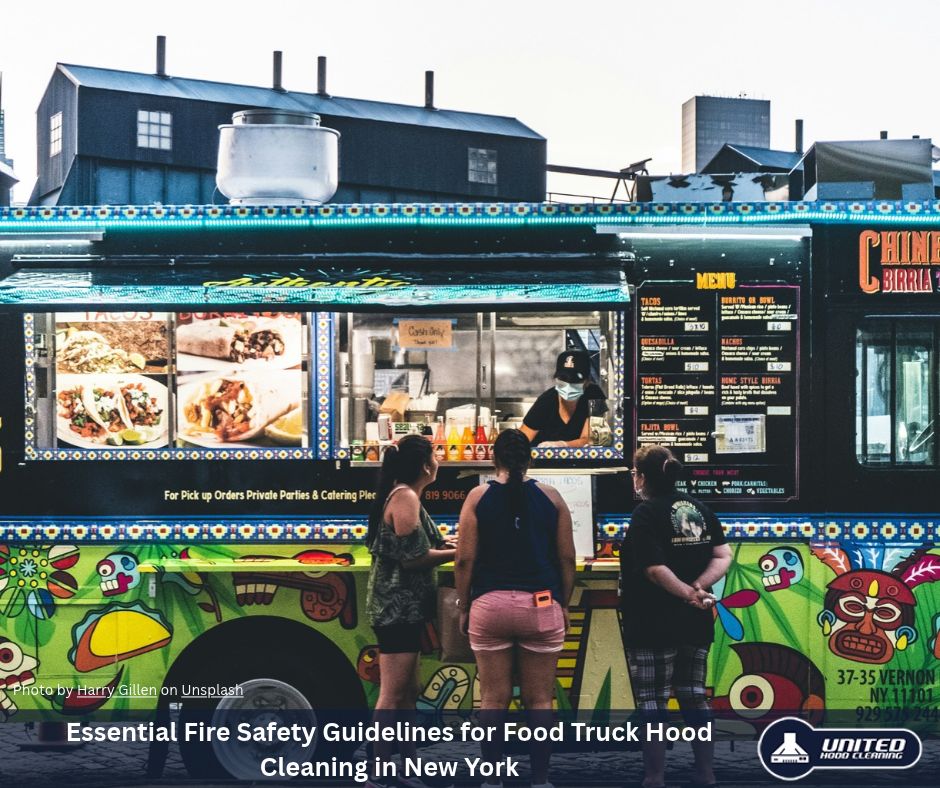
Why Mobile Kitchens Face Unique Ventilation and Fire Hazards
Operating a successful food truck in New York City requires tremendous hustle, culinary skill, and strict attention to mobile fire safety rules. Unlike brick-and-mortar restaurants with sprawling back-of-house kitchens, mobile food vendors cook inside tight, enclosed vehicle quarters with very low ceilings. Because deep fryers, flat-top griddles, and charbroilers sit just inches away from stainless steel walls, intense heat and grease vapors accumulate rapidly. Consequently, scheduling consistent Food Truck Hood Cleaning in New York becomes an absolute necessity for protecting your vehicle, crew, and livelihood.
Inside a compact mobile kitchen, airborne oil particles have almost no room to disperse before hitting your overhead exhaust canopy. During a busy lunch rush in Midtown or Brooklyn, continuous frying coats, baffle filters, plenum chambers, and short rooftop vents with thick condensed grease. Furthermore, food trucks carry onboard propane tanks, electrical generators, and vehicle fuel lines directly beneath or beside the cooking line. If a sudden grease flare-up occurs on the griddle, flames can leap straight into an uncleaned hood and trigger an immediate flash fire.
Understanding these unique spatial risks helps mobile operators treat exhaust maintenance as a daily business priority rather than an afterthought. When you keep your compact ventilation system free of combustible grease buildup, you prevent catastrophic vehicle fires and protect nearby pedestrians. Ultimately, proactive exhaust care keeps your kitchen cooler during summer shifts, extends fan motor life, and ensures your truck stays open for business.
How Intense Cooking Coats Compact Hoods and Short Duct Vents
To appreciate why mobile kitchens require specialized care, you must understand how grease behaves inside short vehicle exhaust systems. In a traditional building, long vertical duct shafts allow grease vapors to cool gradually as they travel toward the roof. Conversely, a food truck exhaust hood sits mere feet below the rooftop discharge fan, leaving almost zero distance for vapor separation. As a result, heavy aerosolized cooking oils slam directly into your baffle filters and fan blades at peak operating temperatures.
Over just a few weeks of high-volume street vending, sticky grease layers coat the interior hood plenum and restrict critical exhaust airflow. When thick grease clogs your baffle filters, the rooftop fan struggles to pull smoke and steam away from your cooking appliances. Instead of venting cleanly outside, hot grease-laden smoke spills back into the truck cabin, coating walls, ceilings, and electrical wiring with flammable residue. Moreover, road vibrations from driving over rough city streets can loosen grease drip cups and cause oil to leak onto hot burners.
Because standard kitchen degreasers and rag wiping only clean visible exterior steel, hidden grease continues building up behind your filters. Scheduling professional Food Truck Hood Cleaning in New York eliminates these concealed fuel pockets before they ignite or choke your ventilation airflow. When every interior surface is stripped clean, your exhaust fan draws smoke efficiently and keeps your mobile workspace safe and breathable.
Navigating FDNY Regulations and Earning Your Certificate of Performance
New York City enforces some of the strictest mobile food vending safety laws in the entire country. Before you can legally park and serve customers on city streets, your vehicle must pass rigorous inspections conducted by the Fire Department of New York. Specifically, FDNY inspectors evaluate your cooking appliances, fire suppression nozzles, portable extinguishers, and exhaust hood cleanliness under National Fire Protection Association Standard 96. Without proper Food Truck Hood Cleaning in New York documentation, inspectors will immediately suspend your mobile vending permit and shut down your operation.
During a mobile fire safety inspection, officials look closely at your exhaust canopy to verify the presence of a valid Certificate of Performance sticker. This official decal proves that an FDNY-certified company cleaned your entire hood, filters, and fan assembly back to bare metal within the required timeframe. Additionally, inspectors remove your baffle filters to shine flashlights inside the plenum and verify that zero combustible grease remains hidden behind the baffles. If your sticker is expired or missing, you face steep municipal fines, vehicle impoundment risks, and lost weekend revenue.
Verify Company FDNY Certification
Always hire an exhaust cleaning provider that holds active FDNY approval for commercial cooking systems so your service decal carries full legal authority during street audits.
Maintain Baffle Filter Integrity
Fire codes require approved stainless steel or aluminum baffle filters rather than mesh filters, and every baffle must sit tightly in its frame without gaps.
Align Fire Suppression Nozzles
After every hood cleaning, verify that wet-chemical fire suppression nozzles remain aimed directly at the center of your fryers and griddles.
Keep Digital Service Logs Onboard
Store copies of your service receipts and before-and-after inspection photos inside your truck glovebox so you can present proof immediately during surprise inspections.
Following these regulatory steps ensures smooth municipal audits and protects your mobile food permit throughout every season of the year. When you stay ahead of FDNY compliance deadlines, you avoid costly administrative headaches and keep your truck earning revenue on the street.
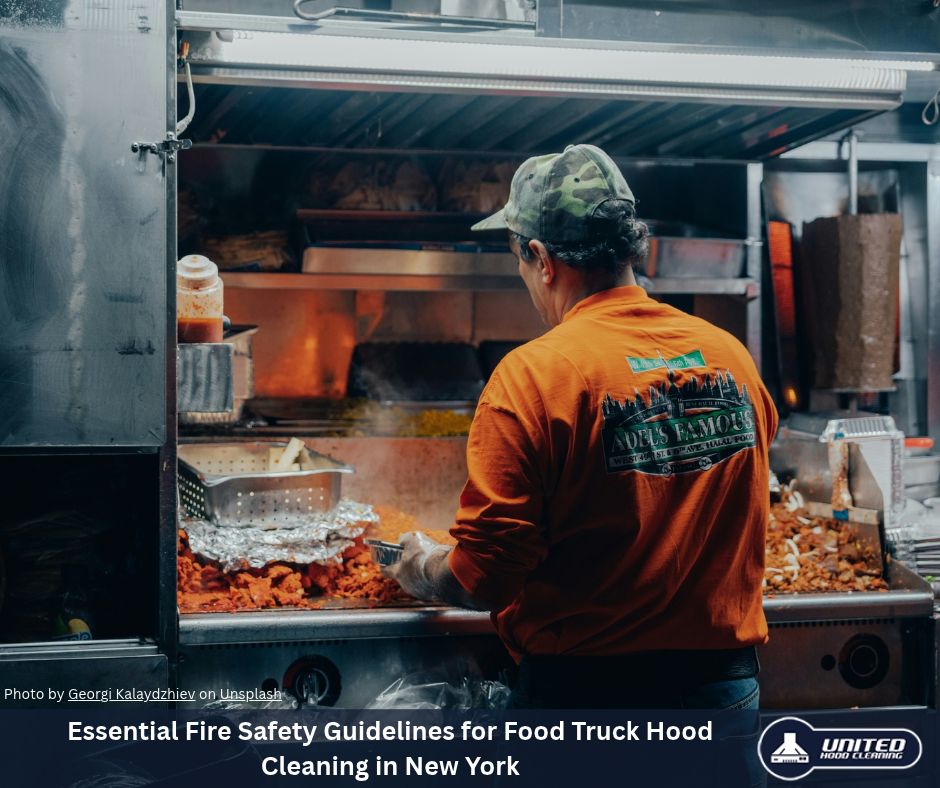
Step-by-Step Bare-Metal Cleaning for Mobile Exhaust Systems
Achieving true fire safety inside a compact vehicle requires a specialized restoration process tailored to tight mobile kitchen quarters. Experienced Food Truck Hood Cleaning in New York technicians follow a systematic bare-metal cleaning procedure designed to remove every trace of grease without damaging sensitive vehicle electronics. Rather than relying on surface wiping, certified specialists strip your entire ventilation path down to clean, shiny stainless steel.
First, technicians shut down your propane supply, disconnect generator power, and cover your fryers, griddles, prep counters, and POS terminals with heavy-duty waterproof plastic sheeting. Next, the crew removes your baffle filters and grease collection trays for deep soaking in commercial degreasing tanks. Meanwhile, specialists manually scrape hardened carbonized grease from the interior hood plenum, duct collar, and rooftop fan housing using specialized short-handle tools. After mechanical scraping loosens heavy buildup, technicians apply food-safe alkaline degreasers to dissolve stubborn oil films completely.
Following chemical dwelling time, technicians rinse the interior hood and rooftop fan with controlled hot-water pressure washing while capturing all wastewater in sealed containment drums. Once rinsing finishes, the crew dries all metal surfaces, polishes your exterior stainless steel canopy, and reinstalls your clean baffle filters securely. Finally, the lead technician inspects the entire airflow path, attaches your updated FDNY Certificate of Performance sticker, and provides photographic documentation for your records. This thorough bare-metal restoration leaves your mobile kitchen spotless, compliant, and ready for immediate morning prep.
Daily Maintenance Habits to Prevent Flash Fires Between Cleanings
While professional bare-metal servicing provides essential deep protection, daily habits performed by your food truck crew play a vital role in preventing flash fires. Because mobile kitchens pack high-heat appliances into small footprints, grease accumulates much faster than in traditional restaurant kitchens. Implementing simple end-of-shift maintenance routines keeps grease buildup manageable and extends the efficiency of your ventilation equipment between scheduled professional cleanings.
- Wash Baffle Filters Every Night: Remove your metal baffle filters at the end of each shift and wash them thoroughly with hot water and commercial degreaser before letting them air dry overnight.
- Empty Grease Drip Cups Daily: Check and empty the metal grease collection cups beneath your hood canopy every evening so warm oil never overflows onto hot cooking surfaces while driving.
- Wipe Down Canopy Surfaces After Service: Use a clean microfiber cloth and food-safe degreaser to wipe visible oil splatters off the exterior hood, backsplash walls, and appliance hoods before closing up.
- Inspect Rooftop Fan Seals Weekly: Climb up to check your rooftop exhaust fan housing for loose fasteners, worn fan belts, or oil leaks that could damage your truck roof membrane.
Combining consistent daily crew care with scheduled Food Truck Hood Cleaning in New York creates an airtight defense against sudden grease fires. When your staff takes pride in keeping filters clean and drip trays empty, your hood pulls smoke effortlessly and your truck remains a safe, welcoming workplace.
Partner with United Hood Cleaning for Certified Mobile Kitchen Care
Keeping a mobile food business compliant and fire-safe requires a responsive service partner who understands the unique demands of street vending. United Hood Cleaning delivers specialized Food Truck Hood Cleaning in New York tailored specifically to compact food trucks, concession trailers, and mobile catering vehicles across the tri-state area. As a family-owned company serving New York, New Jersey, and Connecticut, we employ fully FDNY-certified and IKECA-trained technicians who know municipal mobile vending codes inside and out.
Whether your truck parks at a commissary kitchen in Queens, Brooklyn, the Bronx, or Manhattan, our mobile service crew comes directly to your location. We protect your compact cooking equipment carefully, scrape and pressure wash your hood and rooftop fan back to bare metal, and leave zero mess behind. After polishing your stainless steel hood, we affix an official FDNY Certificate of Performance sticker and send digital before-and-after photos directly to your phone or email.
Because we know food truck schedules revolve around early prep and late-night events, we offer flexible overnight and off-hour appointments seven days a week. Partnering with United Hood Cleaning protects your mobile vending permit, prevents devastating vehicle fires, and keeps your kitchen operating at peak performance. Call our friendly team today at (888) 889-3828 or visit our website to schedule your food truck hood evaluation and stay compliant all year long.