


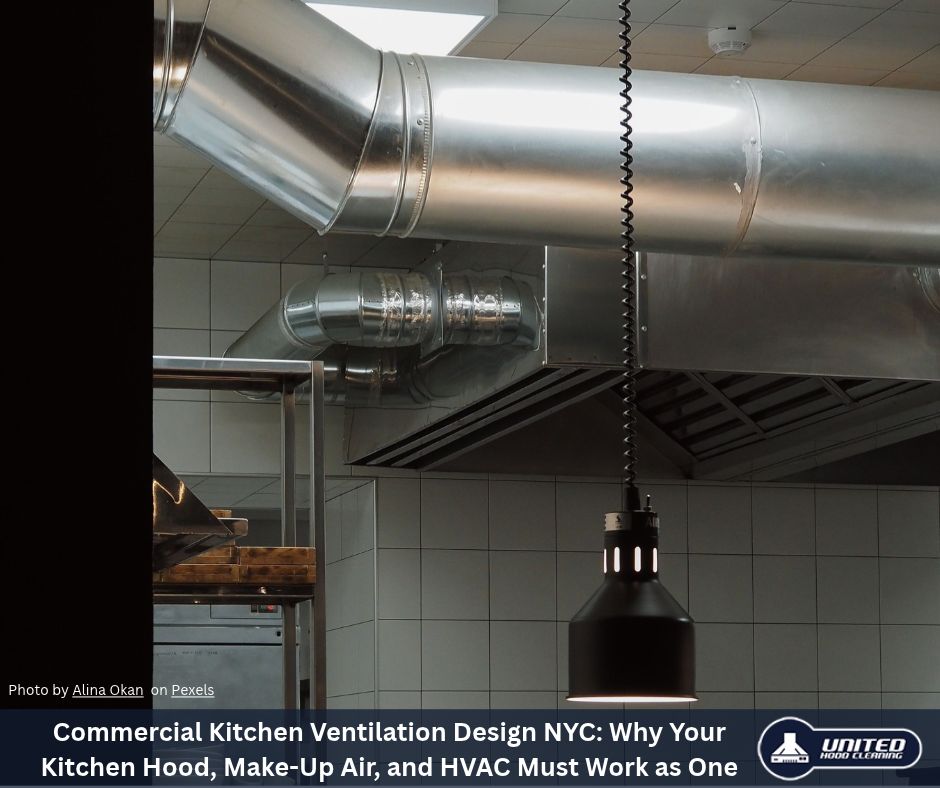
Understanding the Delicate Air Balance in Commercial Kitchens
Operating a high-efficiency culinary facility in New York City requires far more than installing a powerful exhaust fan above the stove line. A truly effective commercial kitchen ventilation design NYC strategy relies on maintaining a precise aerodynamic equilibrium between three interconnected mechanical systems. Specifically, your overhead exhaust extraction hoods, dedicated make-up air supply units, and general building HVAC equipment must operate together as a single unified ecosystem. When facility managers and general contractors treat these components as isolated machines, the entire building suffers from severe airflow imbalances and mechanical strain.
Every cubic foot of hot, grease-laden air that your exhaust hood pulls out of the kitchen must be replaced immediately with clean tempered air. In modern tightly sealed New York commercial buildings, natural air infiltration through windows and doors cannot replenish high-volume kitchen exhaust. Consequently, dedicated make-up air units deliver fresh outside air directly into the culinary workspace to replace extracted exhaust volumes. Meanwhile, your general HVAC system regulates ambient temperature and humidity levels across both the kitchen prep zones and the adjacent dining room.
When these three airflow systems are properly engineered and calibrated, smoke stays trapped inside the hood canopy and indoor temperatures remain comfortable. However, if one component falls out of sync due to poor commissioning or dirty ductwork, the entire facility experiences immediate operational disruptions. Understanding how these mechanical systems interact empowers facility managers and contractors to prevent costly comfort complaints, equipment failures, and energy waste.
How Exhaust Hoods, Make-Up Air Units, and HVAC Interact
To optimize your commercial kitchen ventilation design NYC layout, you must understand the specific role each mechanical unit plays in moving air through the building. Rather than competing against one another, these three systems share continuous airflow boundaries that dictate overall indoor air quality.
- Exhaust Extraction Hoods: Type I and Type II commercial hoods capture convective heat, steam, smoke, and grease aerosols directly above cooking appliances. Powerful rooftop upblast fans pull thousands of cubic feet of air per minute through baffled filters and fire-rated ductwork to keep the kitchen clear.
- Dedicated Make-Up Air (MUA) Units: Make-up air systems draw fresh outdoor air through intake louvers, filter out airborne debris, and temper the air using heating coils or evaporative coolers. By introducing this replacement air near the hood canopy, the MUA unit satisfies the exhaust fan’s suction demand without stealing conditioned air from the dining room.
- General Comfort HVAC Systems: Standard heating, ventilation, and air conditioning equipment maintains pleasant temperatures for guests in the dining area and staff in cold prep zones. When the exhaust hood and make-up air unit remain balanced, the general HVAC system operates within its normal design load without fighting extreme pressure differentials.
Proper coordination between these three systems ensures smooth laminar airflow across the cooking line. Instead of creating turbulent cross-drafts that blow smoke away from the hood filters, balanced replacement air gently guides cooking plumes upward into the exhaust plenum. Achieving this harmony protects culinary equipment longevity while keeping both back-of-house staff and front-of-house diners completely comfortable.
Common Symptoms of Negative Air Pressure in Commercial Facilities
When a commercial exhaust hood removes more air than the make-up air unit supplies, the kitchen enters a state of negative air pressure. Essentially, the building acts like a giant vacuum, desperately pulling replacement air through every unsealed crack, doorway, and plumbing chase available. Recognizing the physical warning signs of negative pressure helps facility managers diagnose ventilation imbalances before they cause serious structural or safety problems.
- Slamming Exterior and Interior Doors: Severe negative pressure creates powerful suction forces across hinged entryways, causing heavy kitchen and customer doors to slam shut violently or become difficult to pull open.
- Lingering Smoke and Grease Haze: Without adequate replacement air feeding the hood canopy, exhaust fan efficiency drops drastically, allowing blue smoke, steam, and airborne grease particles to spill out into the kitchen workspace.
- Drafty and Uncomfortable Dining Areas: When the kitchen lacks dedicated make-up air, the exhaust hood pulls conditioned air directly from the dining room, creating cold winter drafts and unpleasant cooking odors near guest tables.
- Back-Drafting Water Heaters and Gas Appliances: Extreme negative pressure can reverse the natural upward draft inside standard atmospheric gas flues, pulling dangerous carbon monoxide fumes back into mechanical rooms and kitchens.
Ignoring these negative pressure symptoms compromises workplace safety, ruins customer dining experiences, and accelerates grease accumulation on walls and ceilings. Addressing the underlying air balance restores proper capture and containment across your hood line while eliminating hazardous flue back-drafts immediately.
How Unbalanced Ventilation Drives Up Operational and Energy Costs
Beyond causing physical discomfort and lingering smoke, a poorly integrated commercial kitchen ventilation design NYC setup inflicts heavy financial penalties on restaurant operators every month. When mechanical systems fight against unnatural pressure differentials, motors, compressors, and heating elements consume significantly more electricity and natural gas than necessary.
First, an uncompensated exhaust fan spinning against high static pressure struggles to move air, forcing its electric motor to draw excessive amperage. Over time, this constant mechanical strain overheats motor windings, stretches drive belts, and shortens bearing lifespans prematurely. Second, when your exhaust hood steals heated or air-conditioned air from the dining room, your general HVAC compressors must run continuously to replace that lost thermal energy. During freezing New York winters or humid July afternoons, wasting conditioned indoor air adds thousands of dollars to annual utility bills.
Furthermore, neglected hood maintenance directly disrupts the delicate air balance established during initial construction. As heavy grease coats baffle filters and narrows interior duct shafts, exhaust airflow drops below engineered specifications, throwing the entire building pressure ratio off balance. Implementing a holistic maintenance plan that includes scheduled bare-metal cleaning keeps static pressure low and allows every motor to run at peak energy efficiency.
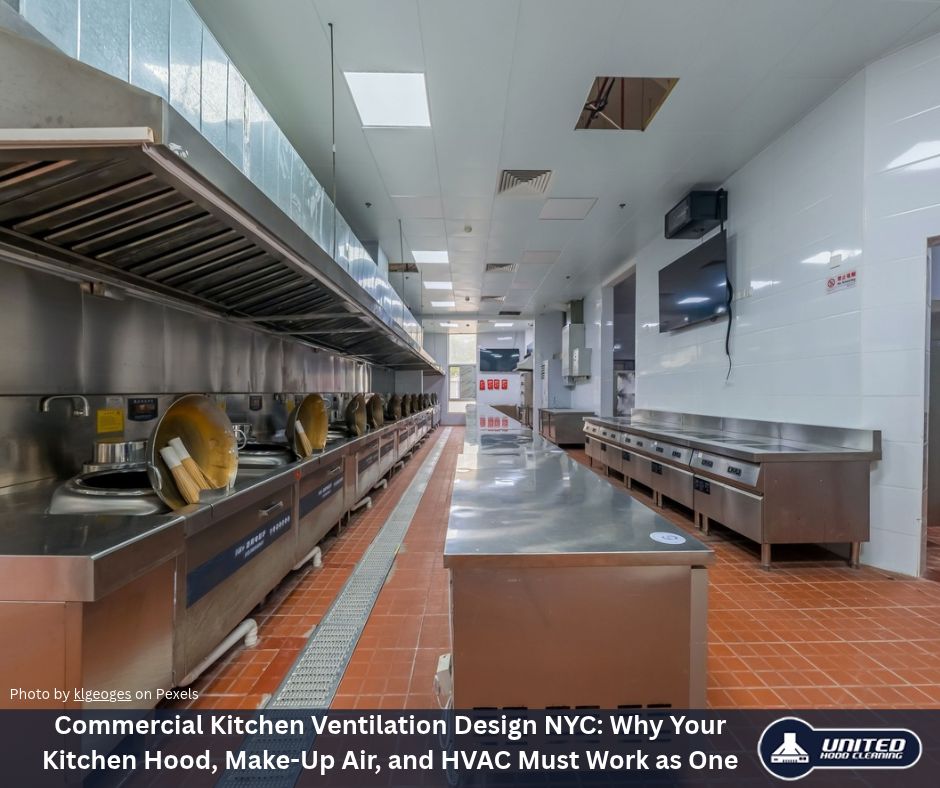
Engineering Best Practices for Facility Managers and Contractors
Whether you are constructing a brand-new culinary space or retrofitting an aging building, following proven engineering principles guarantees a successful commercial kitchen ventilation design NYC installation. General contractors and facility managers must collaborate early during design phases to ensure mechanical specifications match real-world cooking demands.
- Calculate Exact Exhaust and Supply Ratios: Engineers typically design commercial kitchens to operate under a very slight negative pressure relative to the dining room so cooking odors never migrate toward guests. Usually, the make-up air unit supplies roughly eighty to ninety percent of the total exhausted air volume, while general HVAC systems supply the remaining tempered balance.
- Integrate Demand-Controlled Kitchen Ventilation (DCKV): Installing optical smoke sensors and temperature probes inside the hood plenum allows variable-frequency drives to modulate exhaust and make-up air fan speeds automatically during slow prep hours. Slowing fan speeds during off-peak periods slashes electrical consumption and conditioned air loss dramatically without sacrificing capture performance during busy dinner rushes.
- Position Make-Up Air Diffusers Strategically: Contractors must avoid placing high-velocity supply registers directly opposite the hood face, as strong air jets blow smoke out of the capture zone. Instead, low-velocity perforated perimeter diffusers or back-shelf supply plenums introduce replacement air gently without disturbing rising thermal plumes.
- Perform Professional Testing, Adjusting, and Balancing (TAB): Before opening the kitchen, certified air-balancing technicians must measure exact cubic feet per minute readings at every hood, diffuser, and return grille to verify design compliance.
Applying these practical engineering standards prevents expensive post-construction change orders and satisfies strict municipal mechanical code inspections across New York City.
Partner with United Hood Cleaning for Balanced Ventilation Performance
Even the most advanced commercial kitchen ventilation design NYC system loses its precision if grease buildup clogs filters, duct shafts, and rooftop fan blades. United Hood Cleaning helps facility managers, general contractors, and restaurant operators protect their airflow balance through certified exhaust maintenance and system care. As a family-owned business serving New York, New Jersey, and Connecticut, our FDNY-certified and IKECA-trained technicians understand how clean ductwork supports overall HVAC efficiency.
During every scheduled service visit, our specialists thoroughly clean your exhaust canopy, baffle filters, vertical duct risers, and rooftop upblast fans back to bare metal. Removing thick grease deposits restores proper static pressure levels, prevents fan motor strain, and keeps your entire ventilation ecosystem running smoothly. Additionally, we inspect rooftop fan belts, hinge kits, and grease containment units while providing complete digital photo documentation for your compliance records.
With flexible overnight and off-hour scheduling available seven days a week, we maintain your critical exhaust infrastructure without interrupting daily kitchen operations. Partnering with United Hood Cleaning protects your indoor air quality, lowers monthly utility expenses, and ensures total fire code compliance year-round. Call our team today at (888) 889-3828 or visit our website to schedule your facility evaluation and keep your ventilation systems working together seamlessly.